BT30 vs. ISO30 vs. BT40: Rigidity & Speed Guide
In the 2026 industrial landscape, choosing the right spindle interface is no longer a matter of preference鈥攊t's a matter of Return on Investment (ROI). This deep-dive analyzes the physics of taper contact and vibrational harmonics.
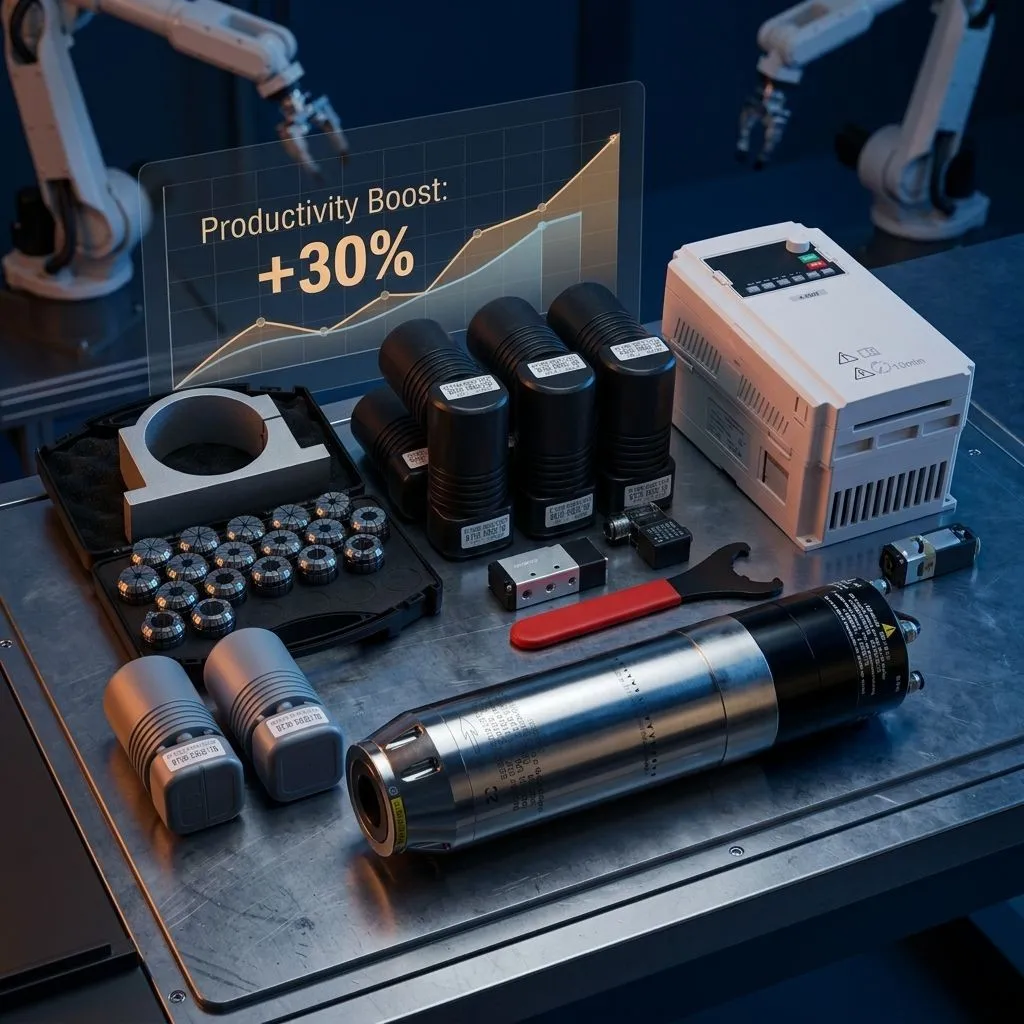
1. The Physics of Radial Rigidity
While ISO30 is the favorite for woodworking due to its high-speed tool change dynamics, BT30 spindles (like the Lingyu 7.5kW series) provide a 25% increase in radial rigidity. This is critical when machining S136 mold steel or heavy-duty aluminum extrusions where Z-axis deflection must stay under 0.005mm.
| Standard | Max RPM | Rigidity Index | Best Application |
|---|---|---|---|
| ISO30 (Air) | 24,000 | Medium | Nesting / Woodworking |
| BT30 (Water) | 18,000 | High | Metal / Heavy Mold |
| BT40 (Water) | 12,000 | Extreme | Aerospace / Steel |
2. Why Balacing (G0.4) is the Deciding Factor
At 24,000 RPM, the centrifugal force of an imbalanced tool holder is exponential. We've recorded that a G1.0 balanced unit extends P4 ceramic bearing life by 40% compared to common G2.5 units. At Lingyu, G0.4 is our baseline, ensuring zero vibrations that translate into mirror-finish surface quality.
Ready to integrate high-precision spindles?
Join 100+ global OEM partners. Apply for our 2026 Distributor Program �?/a>